
By Usama Nicola, Bethlehem, Palestine, October 2025
It is said that a tailor once wanted to teach his grandson a great lesson in his own way. While sewing a new garment, he took his precious scissors and began cutting a large piece of cloth into smaller pieces to make a beautiful robe. When he finished cutting, he threw the scissors on the ground by his feet, then took a small needle and began sewing those torn pieces back together into a complete garment. When he was done, he placed the needle in the turban on his head.
The grandson watched in amazement and asked his grandfather:
“Why did you throw your precious scissors on the ground but keep the cheap needle on your turban?”
The grandfather smiled and said:
“My son, the scissors cut and separated the cloth, but the needle gathered it and united it again. Do not glorify those who divide people, no matter their status, and always stand with those who seek to unite and repair what has been torn.”
As I read this story, I found myself thinking about the history of us Palestinians over the past hundred years. In the story, the scissors divided the cloth into small pieces, while the needle gathered those pieces and restored their form and beauty. The idea is simple but profound, because what the scissors did to the cloth is exactly what colonialism has done in our region for more than a century.
In a few days, the anniversary of the Balfour Declaration on November 2 will arrive a statement that opened the door to a new colonial project in Palestine, completing what the Sykes–Picot Agreement began: the division and fragmentation of the region. At that time, British and French politicians drew straight lines on maps they barely knew, cutting apart the large “cloth” known as Greater Syria into states and provinces, assigning borders and allegiances to each piece.
From that moment, the scissors turned from a tailor’s tool into a weapon in the hands of colonial powers. They cut the land, then cut the memory, until every part lived its own separate story. Palestine, placed under the British Mandate, paid the highest price. The Balfour Declaration granted a “national home for the Jewish people” in land inhabited by a deeply rooted Palestinian people for thousands of years. Thus began the long story of displacement, division, and ongoing occupation.
Yet amid this history full of scissors, there have always been small needles working silently anyone who tried to gather the torn pieces and weave the threads of cloth back together. The needle is every international or Palestinian hand still holding an olive branch, weaving a kufiya, or writing about memory to prevent its loss. The needle is the voice of everyone calling for unity and compassion, believing that what was separated can be sewn back together again.
Today, we live the result of a century of cutting from Sykes–Picot to Balfour, to the Nakba, to the setback, to the walls that divide villages, checkpoints that split cities, and divisions that tear people apart from within. But the story I read reminded me that every act of tearing also holds the possibility of mending.
Perhaps it is time to restore the value of the needle for all of us to choose to be those who gather, not those who cut; those who repair the Palestinian fabric torn by colonialism and division. A beautiful garment is not made by scissors, no matter how precious they are, but by the small needles that know unity is the only path to healing.
On the anniversary of the Balfour Declaration, may we remember that what was separated can be sewn, and what was cut can become a whole garment again if our hands work with the thread of mercy, faith, justice, unity, and memory.
Support Usama’s writing ministry and family by subscribing to Bethlehem Updates as a generous supporter.
About the Author
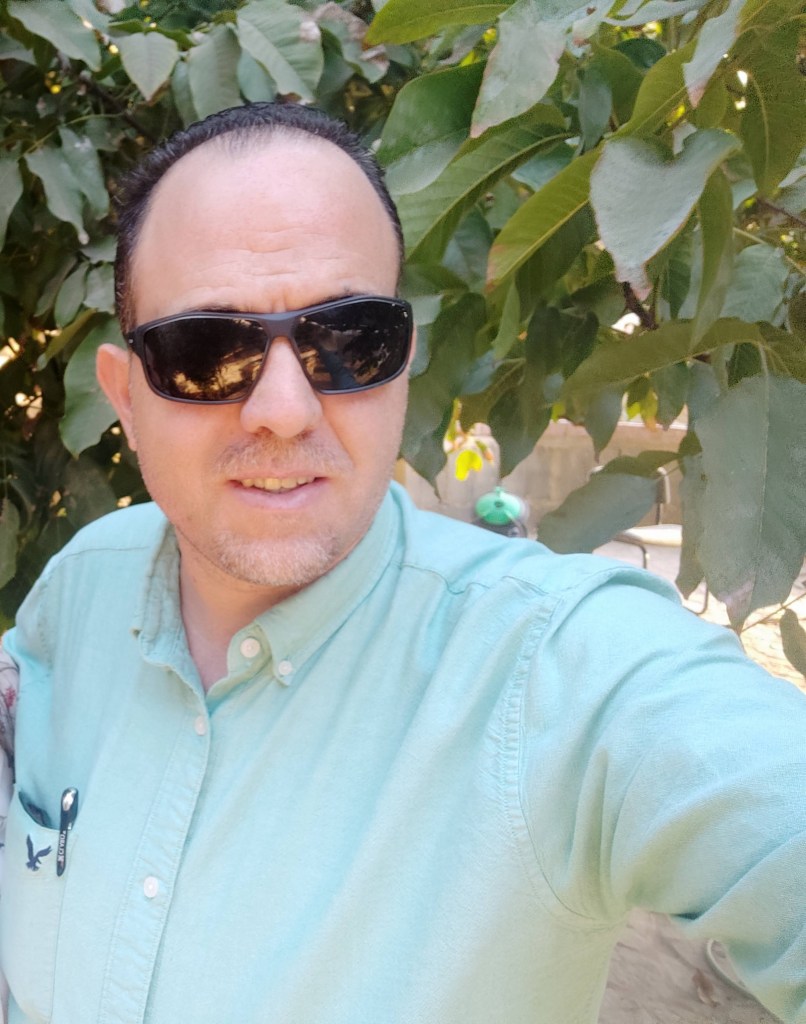
Usama is a Palestinian civil society activist, husband, and father of three, rooted in the ancient and resilient city of Bethlehem. He brings together his love for people, justice, and faith in everything he does. His writing flows from the lived realities of Palestinians under occupation, grounded in both hope and heartbreak, and carried by a deep commitment to human dignity and spiritual reflection.
Bethlehem the city where heaven met earth is not only Usama’s birthplace, but also the heart of his mission. For him, it is a sacred place where history, struggle, and faith meet; a city that teaches him daily about rootedness, resistance, and radical love. His stories rise from this soil, offering readers an invitation to listen deeply, reflect honestly, and act justly.
Through his Patreon page, Usama shares regular reflections, updates from Bethlehem, and spiritual insights, building a global circle of solidarity and learning. His hope is to warm hearts, challenge comfort, and remind people everywhere that even in places of sorrow, life still grows.
Support Usama’s writing ministry and family by subscribing to Bethlehem Updates as a generous supporter.
 Christian Minus Christianity