

By Usama Nicola, Bethlehem, Palestine
Are Our Lives Valued Differently?
In the aftermath of the devastating war on Gaza, where tens of thousands of civilians, most of them women and children, were killed, many in the Arab world have felt that some Western governments respond to Palestinian suffering with indifference or selective empathy, as if Arab lives weigh less on the scale of humanity. This sentiment, rooted in long-standing political, cultural, and media structures, raises a critical question: Is this feeling grounded in reality, or is it merely an illusion?
A Double Standard or a Different “Value” Assigned to Victims?
Western media coverage of conflicts often exposes a stark imbalance in how human suffering is portrayed. A Western civilian life is treated as sacred and irreplaceable, while an Arab civilian is frequently reduced to a passing number on a news ticker. This gap is not about differing levels of “humanity” but is tied to a cultural and political legacy born out of centuries of colonialism and image-making.
From Hollywood to Official Discourse: A Self-Reinforcing Stereotype
One of the clearest manifestations of this distortion appears in the documentary
“Reel Bad Arabs: How Hollywood Vilifies a People”
directed by Sut Jhally and based on the work of Dr. Jack Shaheen. The film reveals how Hollywood has consistently portrayed Arabs as terrorists, oil merchants, buffoons, or backwards desert dwellers. These images have shaped public consciousness, making violence against Arabs appear more tolerable or less visible.
The late Edward Said, in his groundbreaking book Orientalism, unpacked how the West constructed a fictional “backward East,” a narrative used to justify colonial domination and reinforce Western cultural superiority.
Similarly, American thinker Noam Chomsky argues that the association of Islam with terrorism in Western discourse is not an objective assessment but a political tool that facilitates foreign policy agendas.
Moroccan scholar Fatema Mernissi criticized Western portrayals of Arab women as helpless victims, arguing that this image stems from misunderstanding Arab culture and relying on simplistic stereotypes.
The Borrell Moment: Europe as a “Garden” and the World as a “Jungle”
This hierarchical worldview surfaced bluntly in comments by EU foreign policy chief Josep Borrell, who described Europe as a “garden” and the rest of the world as a “jungle.” His remarks drew widespread backlash for echoing the same civilizational superiority that Edward Said warned against decades ago.
Have Arabs Contributed to Reinforcing the Stereotype?
While the distortion originated in the West, certain Arab analysts and political figures have, intentionally or not, reinforced negative stereotypes by presenting Arab societies as inherently incapable of democracy or development, as if decline were an unchangeable fate.
How Do We Reclaim Our Human Image?
Restoring our image does not begin with asking for validation from others, but rather:
- Educating children to value their identity and cultural depth
- Preserving cultural heritage without falling into inferiority or superiority complexes
- Engaging with the world rather than fearing it
- Producing our own narratives, instead of allowing others to define us
When people meet outside the noise of politics and media, we discover that we share the same human needs: safety, dignity, love, and justice.
Conclusion
The painful truth is not that our humanity is lesser, but that some Western political and media narratives treat it as such. Ordinary people, however, often do not carry this hostility or bias.
Justice begins with exposing distortions, understanding their origins, and rebuilding our self-image based on an honest awareness of our history, dignity, and universal human values.
Support Usama’s writing ministry and family by subscribing to Bethlehem Updates as a generous supporter.
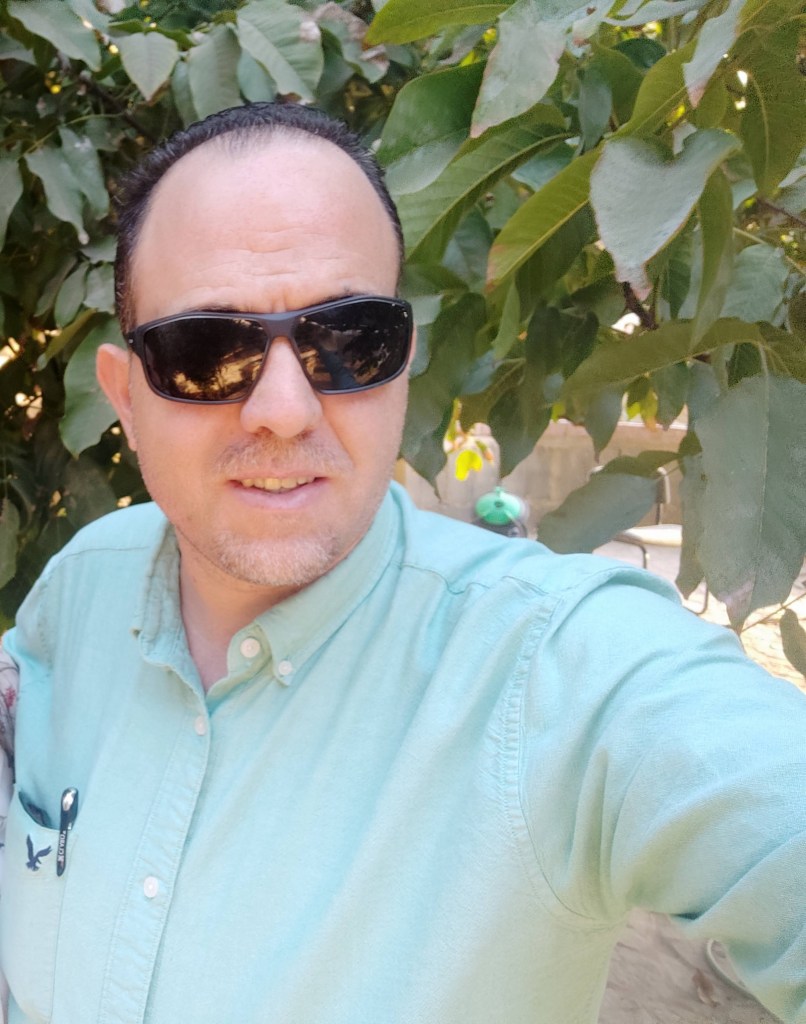
About the Author
Usama is a Palestinian civil society activist, husband, and father of three, rooted in the ancient and resilient city of Bethlehem. He brings together his love for people, justice, and faith in everything he does. His writing flows from the lived realities of Palestinians under occupation, grounded in both hope and heartbreak, and carried by a deep commitment to human dignity and spiritual reflection.
Bethlehem the city where heaven met earth is not only Usama’s birthplace, but also the heart of his mission. For him, it is a sacred place where history, struggle, and faith meet; a city that teaches him daily about rootedness, resistance, and radical love. His stories rise from this soil, offering readers an invitation to listen deeply, reflect honestly, and act justly.
Through his Patreon page, Usama shares regular reflections, updates from Bethlehem, and spiritual insights, building a global circle of solidarity and learning. His hope is to warm hearts, challenge comfort, and remind people everywhere that even in places of sorrow, life still grows.
Support Usama’s writing ministry and family by subscribing to Bethlehem Updates as a generous supporter.
 Christian Minus Christianity