By, Usama Nicola, Bethlehem, Palestine
Christmas in Bethlehem is never marked by a single day. Instead, the city lives the season across multiple calendars and traditions. Roman Catholics and many Protestants celebrate on December 25, Greek Orthodox Christians on January 7, and Armenian Orthodox Christians in January 19, following the Julian calendar. Together, these observances stretch Christmas across weeks, allowing Bethlehem to live and breathe the season in layered and deeply rooted ways.
This year, Christmas in Bethlehem and across Palestine felt both radiant and resilient. After two years of interrupted celebrations, joy returned, quietly but unmistakably. Town squares glowed with Christmas trees, festive lights traced the narrow streets, and homes and shops welcomed the season with care and intention. Families gathered with a tenderness shaped by absence and uncertainty, aware that such moments cannot be taken for granted.
Tree-lighting ceremonies and Christmas celebrations drew people Christians and Muslims, as well as internationals from nearby neighborhoods and distant villages. Scout parades filled the streets with drums and movement, Santa’s house brought moments of laughter to children, and seasonal performances blended ancient hymns with contemporary melodies. These gestures, simple on the surface, carried deep meaning for children and adults alike, many of whom still carry memories of holidays marked by silence, restrictions, and fear.
Yet the joy was never detached from reality. In markets, churches, and living rooms, celebration unfolded alongside grief. Conversations returned again and again to Gaza, to ongoing settler violence, to daily restrictions and economic strain in the West Bank. The pain is real, woven into everyday life. And yet, the act of gathering itself became a form of resistance, a refusal to surrender hope. Sharing food, singing carols, watching children offer handmade gifts, these were quiet declarations that despair would not have the final word.
Christmas in Bethlehem, the birthplace of Jesus Christ, carries a spiritual weight unlike anywhere else. Here, faith is not abstract. It is embodied in place, memory, and struggle. In 2025, as pilgrims, local Christians, and the global Church turn their hearts toward Bethlehem, the city stands at the intersection of ancient promise and present hardship. Beneath the same skies where angels once proclaimed, “Glory to God in the highest, and on earth peace, goodwill toward men” (Luke 2:14), the message of Christmas remains urgent and unfinished.
Christmas is not merely a remembrance of something long past. In Bethlehem, it is a living hope, pressing forward through division, fear, and fatigue.
The streets of the city are vibrant with celebration and heavy with longing. Inside the Church of the Nativity, worshippers from many nations gather, their prayers echoing the unity Christ promised. Outside, political tension, economic uncertainty, and social fragmentation shape daily life for Palestinian Christians and their Muslim neighbors alike. The nativity story of a family seeking shelter, of shepherds on the margins receiving the first good news, resonates deeply here. Christmas in Bethlehem today holds together ancient ritual and a contemporary cry for peace, justice, and dignity.
Across Palestine, Christmas is marked by resilience and faith. In towns and villages, small Christian communities gather in churches shaped by centuries of prayer and present-day adversity. Candles are lit, bells ring, and carols proclaim light in the darkness. Though few in number, Palestinian Christians continue to bear witness to God’s faithfulness, affirming that “the Word became flesh and dwelt among us” (John 1:14). Even in places scarred by separation and violence, Christ remains Emmanuel, God with us.
The broader experience of Christmas here is shaped by deep tradition and warm hospitality, but also by checkpoints, migration, and the ache of separation. When believers pray, “Pray for the peace of Jerusalem, may they prosper who love you” (Psalm 122:6), this prayer is not symbolic or distant. It is grounded in daily acts of care, perseverance.
Theologically, Bethlehem holds profound meaning. Systematic and doctrinal traditions recognize it as the place of Incarnation, where God enters human history, affirming the dignity and worth of every life. Biblical theology reads the nativity as the fulfillment of ancient promises, binding past prophecy to present hope. Philosophical theology reflects on the paradox at the heart of Christmas, divine power revealed through vulnerability, humility as the path to redemption, and love as the force that sustains faith amid suffering.
The Incarnation reminds us that God chose nearness. Emmanuel proclaims presence, not abandonment. Peace, in its biblical sense, is not merely the absence of violence, but the fullness of God’s shalom, justice, restoration, and wholeness.
From this perspective, Christmas in Bethlehem and Palestine stands as a powerful testimony. Even as hardship persists, the light that dawned two thousand years ago continues to shine. It calls us to prayer, to justice, and to reconciliation. It invites us to trust the One who “has broken down the dividing wall, that is, the hostility between us. (Ephesians 2:14), bringing healing not only to Bethlehem, but to hearts and nations longing for peace.
Support Usama’s writing ministry and family by subscribing to Bethlehem Updates as a generous supporter.
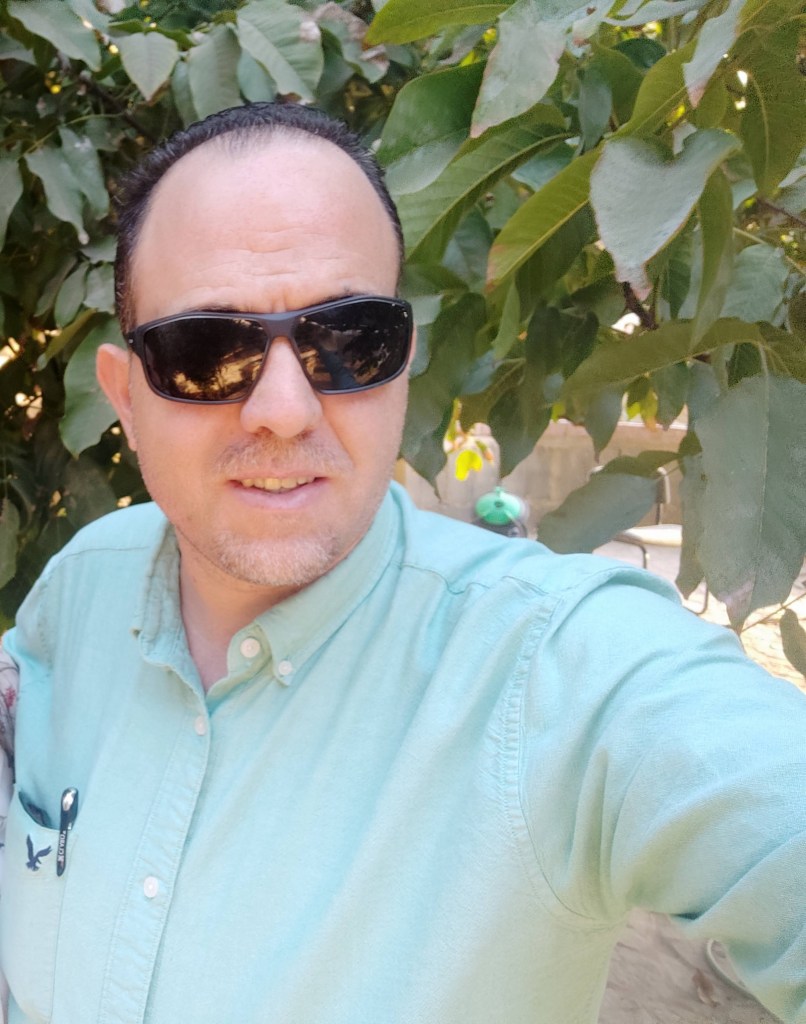
About the Author
Usama is a Palestinian civil society activist, husband, and father of three, rooted in the ancient and resilient city of Bethlehem. He brings together his love for people, justice, and faith in everything he does. His writing flows from the lived realities of Palestinians under occupation, grounded in both hope and heartbreak, and carried by a deep commitment to human dignity and spiritual reflection.
Bethlehem the city where heaven met earth is not only Usama’s birthplace, but also the heart of his mission. For him, it is a sacred place where history, struggle, and faith meet; a city that teaches him daily about rootedness, resistance, and radical love. His stories rise from this soil, offering readers an invitation to listen deeply, reflect honestly, and act justly.
Through his Patreon page, Usama shares regular reflections, updates from Bethlehem, and spiritual insights, building a global circle of solidarity and learning. His hope is to warm hearts, challenge comfort, and remind people everywhere that even in places of sorrow, life still grows.
Support Usama’s writing ministry and family by subscribing to Bethlehem Updates as a generous supporter.
 Christian Minus Christianity