By Usama Nicola, Bethlehem, Palestine
Reading the article “The Flaws of Christian Zionism” by Fr. David Neuhaus was both deeply affirming and emotionally challenging. Affirming, because it articulated many of the tensions that Palestinian Christians have lived with for generations; challenging, because it reminded me how often our voices and experiences are absent from global Christian conversations about the Holy Land.
Christian Zionism often presents the modern State of Israel as the direct fulfillment of biblical prophecy and as a necessary step in God’s plan for history. For many believers around the world, this interpretation seems compelling because it draws on familiar biblical narratives about the people of Israel and the land promised to them. Yet, as Neuhaus explains, this interpretation relies on a highly selective and literal reading of Scripture that disconnects biblical texts from their historical context and from the broader message of the Gospel.
From my perspective as someone born in Bethlehem, the town where Christians Jesus Christ was born the reality of the land is far more complex than the theological narratives often promoted abroad. Palestinian Christians are not simply observers of biblical history; we are part of the living Christian community of this land. Our churches, traditions, and families have existed here for centuries. Yet discussions shaped by Christian Zionism frequently speak about the land without acknowledging the people who continue to live here, including its indigenous Christian communities.
One of the most powerful insights in Neuhaus’s article is his warning against turning Scripture into a tool for political agendas. The Bible, when read through the lens of the Gospel, calls believers to justice, compassion, and reconciliation. However, when biblical texts are used to justify domination or to ignore the suffering of others, they risk being distorted in ways that contradict the very message they are meant to proclaim.
For Palestinian Christians, faith is not an abstract theological debate. It is lived daily in a context marked by political conflict, restricted movement, and uncertainty about the future. Because of this reality, the message of the Gospel centered on love, dignity, and peace, takes on a particularly urgent meaning. Our hope is not rooted in political power or territorial claims, but in the belief that all people created by God deserve justice and dignity.
Reflecting on Neuhaus’s critique of Christian Zionism invites Christians around the world to listen more carefully to the voices of local communities in the Holy Land. It challenges believers to read Scripture responsibly and to remember that the Gospel calls us not to defend political ideologies but to embody the values of Christ: mercy, justice, and peace.
Ultimately, as a Palestinian Christian from Bethlehem, my reflection on this article is a call for a more faithful and compassionate Christian witness, one that recognizes the humanity of all who live in this land and seeks a future where faith becomes a bridge for reconciliation rather than a justification for division.
About the Author
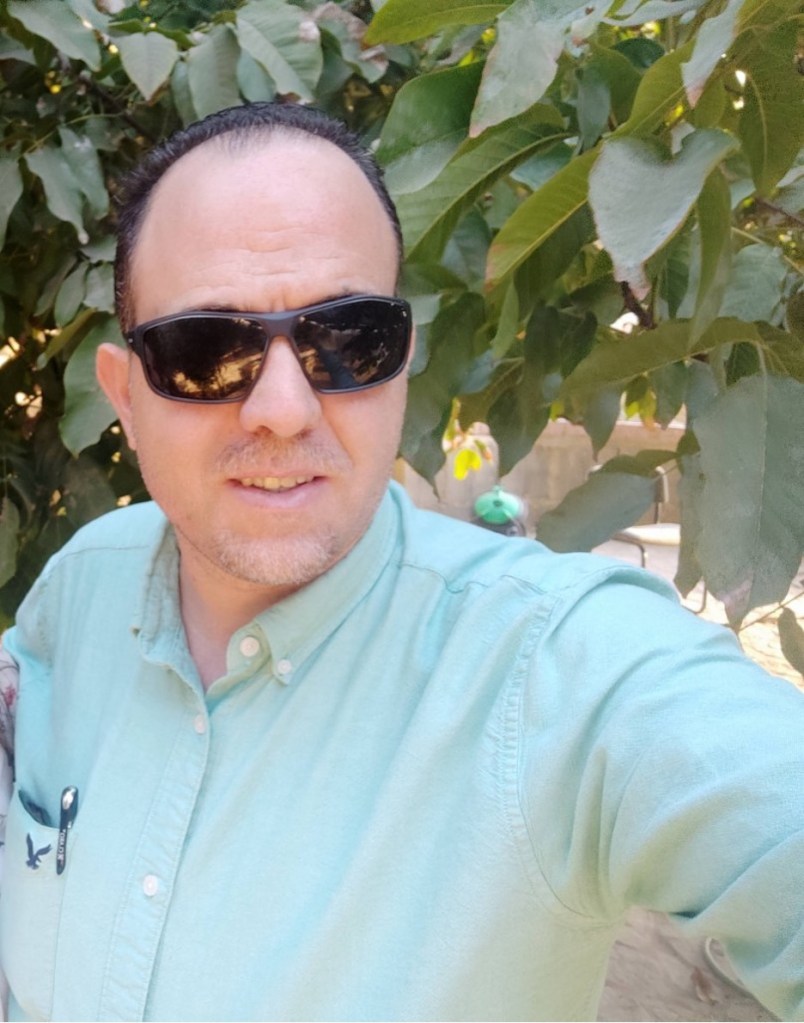
Usama is a Palestinian civil society activist, husband, and father of three, rooted in the ancient and resilient city of Bethlehem. He brings together his love for people, justice, and faith in everything he does. His writing flows from the lived realities of Palestinians under occupation, grounded in both hope and heartbreak, and carried by a deep commitment to human dignity and spiritual reflection.
Bethlehem the city where heaven met earth is not only Usama’s birthplace, but also the heart of his mission. For him, it is a sacred place where history, struggle, and faith meet; a city that teaches him daily about rootedness, resistance, and radical love. His stories rise from this soil, offering readers an invitation to listen deeply, reflect honestly, and act justly.
Through his Patreon page, Usama shares regular reflections, updates from Bethlehem, and spiritual insights, building a global circle of solidarity and learning. His hope is to warm hearts, challenge comfort, and remind people everywhere that even in places of sorrow, life still grows.
Support Usama’s writing ministry and family by subscribing to Bethlehem Updates as a generous supporter.
 Christian Minus Christianity