
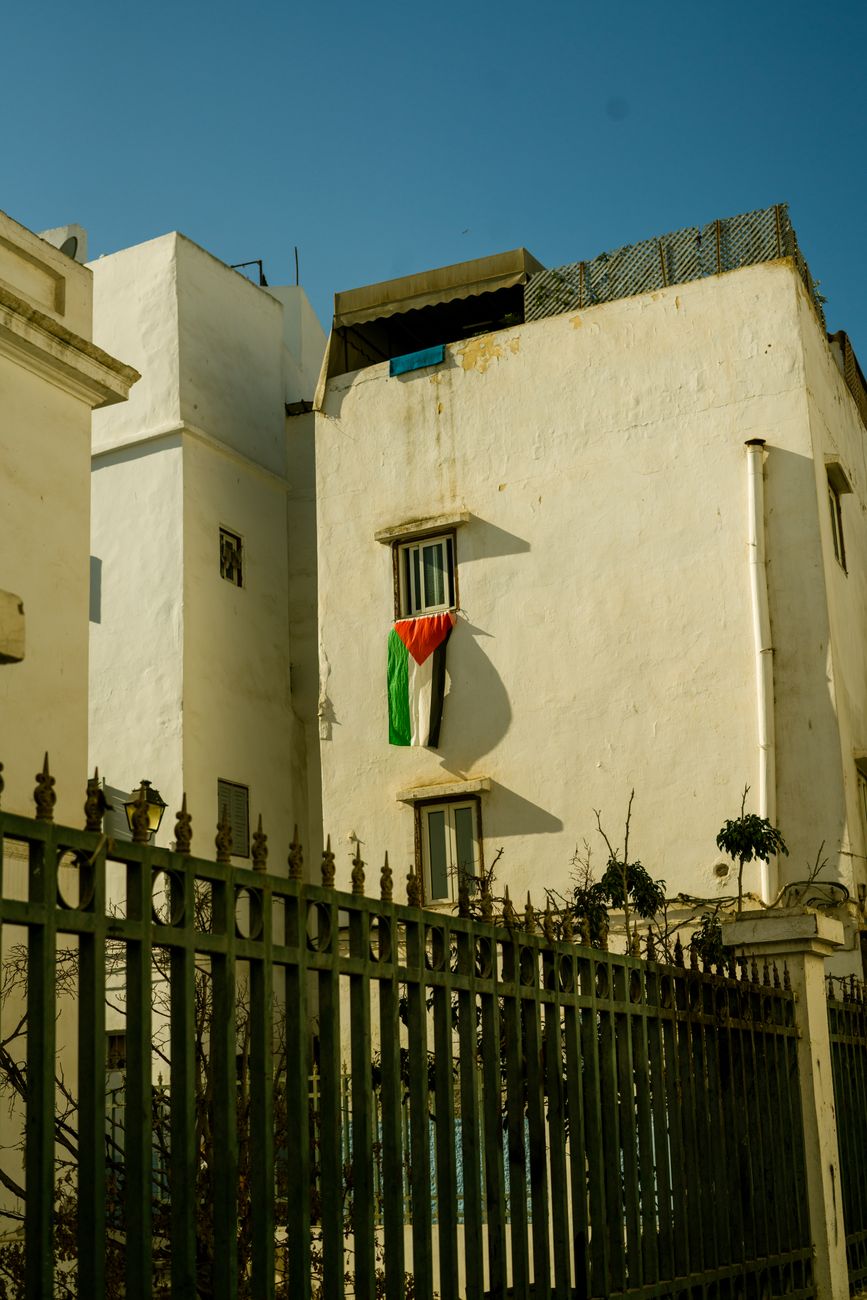
Erin is the Founding Director of the Erin Grimm School: https://eringrimm.school.
The Book: Christians for a Free Palestine
Erin’s third book addresses Jewish suffering as it engages more global themes of justice, equality, religious equality, and Palestinian liberation. See Real Rent Duwamish: https://www.realrentduwamish.org, and if you like this book make a donation since Erin lives on the unceded territories of the Duwamish people.
I. Dedication
This book is dedicated to the Palestinian people, to Todd, who beautifies my life and shares with me my soul, and Kathy Stotler, who encouraged me to quit my job and write, and was one of the most creative and gracious women I have ever known. It is inspired by the Christians for a Free Palestine Movement, of which I am a member, but does not speak on its behalf.
II. About the Author
Erin Grimm is author of Emergent Grace and What I Remember of the Little I Understand. A certificated teacher, she has over ten years in the social justice education field, and is a former department chair, language learning specialist, and restorative justice trainer, who has taught Russian and German in the University of California system and French, Spanish, and ESL in numerous high schools. Erin holds an MA in missional leadership, was a Fulbright scholar to Moscow, Russia, and holds additional MAs in German and Comparative Literature, with certificates in linguistics and cricial theory.
Erin has a deep affinity with the Palestinian people and treasures her relationships with friends living there now.
*Disclaimer: Nothing in this book is meant to replace professional medical or therapeutic advice. Seek professional medical help in all relevant moments of challenge.*
III. Acknowledgments
My acknowledgments are brief, but my indebtedness is profound. Thank you, Todd, for being my best friend, my supporter, and provider. Thanks also to Rick and Marilyn, Nev, Sharon, Marty, Joe, Diane, Brent, Mitri, Nawras, Munther, Claude, Hiba, Ibtisam, NNU, SPU, Doug and Cindy, Rabbi David, Sahar Aziz for scholarship and dedication to real justice, Bethlehem Bible College, Rania, Ramzi, Wyn and Edric, Len, Mary, Matthew, Ian, Gwen, Tom, and Tina, Stacie, Rhona, Jeff, Carmen, and all the contributors to this book.
In Loving Memory of Kathy Stotler.
IV. Preface
Here’s how I pray for people in absolute crisis and how my prayer ministry began for Palestinians I personally know on the West Bank in October:
First,
First, I imagine the person in their fullness and with their ailment, and see the ailment as a blockage of energy that is preventing them right now from seeing themselves as the child of God that they are and all that they are meant to be. It is painful to see the kink that is blocking them from their potential, and I remind myself how much stronger they will be for this ordeal once we get grace flowing through the system again. Once they’re ready and able to ask for grace.
At first when I begin my prayer the person is my size—it’s as though they are sitting right next to me. But then I shrink them down smaller into the size of the palm of my hand in my mind’s eye . . . they become a little person in my palm, who is swollen with pain and suffering. I then imagine a golden ball of God’s grace surrounding them and then around that I envision a bright white orb of protection and divine benevolence that will promote their healing.
The soul sufferer lies in this womb of golden grace and ethereal love, the love of Jesus, and I start imagining this grace and love surrounding the individual, watching as it permeates their skin, and then flows down into the lungs, and the heart, and the whole body and their entire being, and all the surrounding love of the room they are in. The glow is deep and warm because of the shocking love of it all, and I imagine this in my mind’s eye.
I imagine their mind being made new in Christ and the hands of Jesus, with holes from the nails, cradling their head and massaging their temples and the holy space between the eyebrows as he brings them living water.
I pray that God would purify and cleanse the mind and body gradually, and thoroughly, and with care. I visualize this happening and the process by which they come to allow this to happen to themselves.
Prayers for people who are suffering in their soul need to be filled with hope and not pity. How we pray for people shapes what happens. Imagine golden grace filling the top of the head and radiating throughout the body, clearing any blockages and erasing the shame that keeps the trauma intact. Pray in a way that makes space for their future wellness.
Introduction: Justicia: The Life and Teachings of Christ
“. . . those features of daily life that appear to us now as normal are the ones crying out the loudest for our scrutiny.” —Gabor Maté, The Myth of Normal
“The poetic spirit is active in us, but if we are unable to penetrate our innermost self, we express feelings that are sparked within us by nature and by other people’s expressions of feeling—ourselves, that sanctuary of humankind, we won’t express.” —Odoevsky, Psychological Observations
In his book Scandalous Obligation: Rethinking Christian Responsibility, Eric R. Severson examines responsibility through the lens of the story of the rich young man
In his book Scandalous Obligation: Rethinking Christian Responsibility, Eric R. Severson examines responsibility through the lens of the story of the rich young man who asks Jesus, “What must I do to inherit eternal life?” (Lk. 18:18 NIV). Perhaps you recall the tale, but just in case, I’ll share it with you here. Jesus responds to the young man by telling him to honor the commandments: “You shall not commit adultery, you shall not murder, you shall not steal, you shall not give false testimony, honor your father and mother” (18:20 NIV). The man responds that he has done this since early childhood.
Jesus replies, “You still lack one thing. Sell everything you have and give to the poor, and you will have treasure in heaven. Then come, follow me” (Lk 18:22 NIV). The young man walks away disappointed. Severson remarks that the young man’s question itself is a self-centered approach to responsibility and that his disappointment with Jesus’s response stems from his “broken model of responsibility.”[2]
I have taught French, Russian, German, English, and Spanish and have served as a restorative justice trainer. As a language learning specialist at a local school district, I helped plan the dual language Spanish program for the high school down the street from me. Learning that Spanish-language Bibles use justicia (justice) for both justice and righteousness has changed my life and transformed my faith to the extent that I made a whole website about it. As I say in my BibleSpanish.com website: “Justicia as righteousness just isn’t gonna cut it without thinking from the holistic, what I like to call integrous, perspective that Jesus embodied and also taught through his life–and not just words.”[3]
Justicia (the translation from the Hebrew tzedeck) is comprehensive, encompassing the whole plane of existence. With justicia-responsibility, what emerges is a sense of overlap between our relationship between God and us—what theology describes as a vertical axis—and between us, our fellow humans and the environment—the horizontal axis. Art has conveyed this overlap for centuries. This concentricity is manifest in the image of Christ glowing and surrounded by light in endless masterpieces, encapsulated as he was by a luminous aura of holiness.
Justicia is about unity and integrity. It was integral to Christ’s life and teachings. This book is about unity and living a unified, Christian life of justicia-responsibility.
Overview (Walter Benjamin, the Frankfurt School, and Auschwitz)
In this book I teach how holistic, systemic alleviation of illness—social, moral, and environmental—can unfold in our thoughts, psyches, families, institutions, and governments. Using the word “alleviate” rather than “treat” points to the deeper truth that humans can’t be cured of their humanity, but that it must be embraced and healed.
Alleviation demands we transform the atmospheres of our lives. In this way we refashion a new heaven and a new earth—today. My insights are a blend of the social justice education I was trained in and also my MA in German with a focus in social theory, including social justice theory, what is called “critical theory.” I studied famous Jewish writers from the Frankfurt School who philosophized poignantly about whether we could talk about philosophy and critique after Auschwitz.
My favorite theorist from the period was Walter Benjamin (1892-1940), who decided it was better to die than to be seized by the Nazis. He died at Portbou on the French-Spanish border as he fled the Third Reich. One of the saddest essays for me to read, especially given its clairvoyant awareness, is on his experience of unpacking his library, which he had to leave behind as a Jew fleeing Nazi persecution. With this book, I take his approach to history to heart.
If the impression we get upon reading Benjamin’s theses “On the Concept of History” remains ever inarticulable, as if housed in the realm of preverbal thought, then this is because Benjamin has entrusted his text with the task of making unfamiliar not simply the concept of history but our approaches to this concept. Benjamin makes strange the very constellations by which we think about the concept of “history,” bringing into relief problematic structures that dominate our entry-points into the historical mode of thinking and, by the time we reach their end, to the chagrin of many a commentator, no entry point into history remains free of its “situatedness.”
Further, the negative approach of Benjamin’s text—and of the texts of the Frankfurt School in general—rejects the premature equation of consciousness of being caught in a net with being released from it. As a graduate student I wrote about how the chief building blocks of his theses are actually the roots of the German words he used, which are deployed strategically, their meaning becoming highly contextualized. Phrases become unsummarizable, profoundly resistant to their own reification, and thereby resistant to their becoming yet another component of the net that holds us fast as we enter the realm of historical thought.
Treatment is a Colonial Concept
For my MA in Comparative Literature, I focused on French and Russian. All of my studies were from the eighteenth to nineteenth centuries, when colonialism was at its peak. These might seem very distant realities, but our society is sick because of events that were set in motion during the time period I studied.
Every time we set about restoring individuals, we begin again the work of restoring society because society is composed of individuals. Even serious, debilitating illness may not be experienced as the problem the well imagine it to be, but when illness is a problem it emerges within the context of family, medical, and social systems. Always.
To talk about “treating” people implies that their struggles occur in a vacuum, as if the only the suffering person needs to change. In a way, treatment is a colonial concept, conceived of from a position of power and with an intent to maintain control of the situation (at best) or of a person or people group (at worst). This is often done by labeling, where colonizers labeled people to subdue them.
Edward Said (1935-2003), a professor of Comparative Literature and a Palestinian academic at Colombia, published a book in 1978 called Orientalism, about a form of racism that comes from studies of the Middle East and Arabs. He said that Orientalism, “shares with magic and with mythology the self-containing, self-reinforcing character of a closed system, in which objects are what they are because they are what they are, for once, for all time.”[4]
Said notes the “irresistible impulse always to codify, to subdue the infinite variety of the Orient” and argued that the colonization of the Middle East (and other regions of the world) was made possible through systems of meaning created through literature and exhaustive studies conducted on “the rest of the world” by Europeans. He came to these conclusions by studying the same literature I wrote my MA thesis on—and a lot of other literature besides! Orientalism makes for dense and fascinating reading.
Looking from the West toward the East doesn’t have to be exploitative, however. Many Americans and other Westerners look Eastward with an intent to learn and grow, affirming the cultures they study. The risk is cultural appropriation, whereby we would think that Buddhism as we experience it in the US is Buddhism as it exists in Asia—an impossibility! But a fruitful dialogue can still emerge. One acupuncturist has written about his journey from Western psychiatry toward Eastern Medicine as follows:
“I experienced a growing cognizance of our compulsion to master and control nature for profit, rather than join with it in partnership. I witnessed the consequent destruction of ecological balance, harmony, and life. My awe of ‘creation’ increased, as did my sadness at our loss of reverence and humility. Without these fast-disappearing attributes, man is unequal to his Biblical task as the earth’s steward.”[5]
His new viewpoint with Chinese views of health “liberated [him] to approach energy and human behavior from the standpoint of health (natural functions) rather than pathology.”[6]
Systemic Health
We should “treat” illnesses with medicine, yet we should also avoid doing this without seeking to transform the world in the process. Traditional Chinese medicine teaches that the self is a manifestation of the world, what is called a microcosm.
A parable that circulates in health spaces describes the following scene: an individual, despite consistent and loving medical care, grows increasingly ill. More people in the community become ill, despite people being told to wash their hands and wear protective gear. Looking upstream one day, a health professional discovers a factory systematically poisoning the water. Unemployment rises, mental health issues spread, and people start oppressing the weaker members of the population. Because societies and governments are all interconnected, the issues start spilling into surrounding communities and the borders of the nation. This parable perfectly illustrates the need to heal society and the environment as we restore individuals, nations, and territories such as Palestine, which have yet to be granted nation status. My eyes are fixed most steadfastly, however, on Muslim mothers wearing a hijab, whose cries are absolutely shunned by the Western community that massacres them and their children in Gaza. The Muslim mothers matter just as much as the Christian and Jewish ones!
Health issues can come from powerlessness (trauma), and they can also come from too much power (for example, young mothers can develop a specific form of obsessive-compulsive disorder that comes from their sudden awareness that they could easily end their precious baby’s life). Really, however, these are two sides of the same coin. Global mental health and an end to genocides require acknowledgment of our global interconnectedness with one another, with the environment, and with the worthiness of flourishing of all life on earth (rather than just the lives of those who speak English and who are affiliated with the Judeo-Christian tradition).
Christianity in the West is selective in its compassion in a way that would grieve the heart of Jesus. When we start to theologize in a way that makes us think that homelessness, genocide, and oppression are in any way acceptable, then that means we should drop everything until we have recovered a holistic vision for the flourishing of the whole world.
In my experience of sustained prayer with three Palestinian men, theirs is a crystalline hope. As I pray for them, I am as if transported into the first paragraph of Teresa of Avila’s Interior Castle:
“I thought of the soul as resembling a castle, formed of a single diamond or a very transparent crystal, and containing many rooms, just as in heaven there are many mansions. If we reflect, sisters, we shall see that the soul of the just man is but a paradise, in which, God tells us, He takes His delight.”[7]
Theirs is the type of hope that you have when you believe Jesus is the Son of God and keep faith—even in a war zone. Because Jesus is born. This kind of hope coming from the United States is most meaningful when it comes from the poor, downtrodden, or homeless, but from Palestine, a nation-state-less land—thanks to the American veto—it is the most Christian teaching in the world. Christ was Palestinian after all. He was also Jewish.
(Palestine has yet to be granted national status even though it is a feeble aspiration expressed by most Western governments during every Israeli genocidal campaign against the Palestinians. This is thanks to the American veto paired with our “observer status” in and ample funding of the “Western Europe and Other Group” unofficial UN affiliation. One top UN official who resigned (Craig Mokhiber) was interviewed about his resignation in October about how the Gaza war fit the definition of a genocide–the interview is 50 minutes long by Briahna Joy Gray on her Bad Faith podcast. During the interview, he accidentally refers to the United States as a donor, correcting himself immediately. He also describes in the interview how the “Western Europe and Other Group” includes all Western settler-colonial states and that they have the worst voting record on human rights violations and extreme passivity on matters of other genocides around the world, which they are duty-bound to try to stop [this group includes Western Europe as well as Australia, Israel, Canada, to name the most famous settler-colonial projects aside from the United States, the latter being so powerful that they “observe” everyone else while flooding the UN with money]. The whole interview is so important that I put it on the homepage of my website: https://www.youtube.com/watch?v=NI46qq4o21g.)
Frequently, guilt stands in the way of our ability to build the life for ourselves that would live in the world of Jesus’ teachings. The best advice I have is to observe it, to repent, and then to accept forgiveness. Self-examination is the first step.
What are we comparing ourselves to? Not random rules from the Bible but the life and teachings of Christ. Repentance in the Christian faith does not just mean that we have apologized; it means that we have changed course. In Greek—metanoia—literally implies a change of heart. When we experience a change in heart, we have allowed our past and our remorse for our shortcomings into our consciousness, have offered it up to God to be cleansed and redeemed. We receive forgiveness and the fruit of repentance: lasting change—that is systemic.
Methodology
This book talks about God. Talking and reading about God responsibly requires that we ask: Who are we when we read the Bible? Not as Christians—though that is also essential—but as members of society. And not just as members of society but as members of a certain subset of society. I am a white Christian human being—and it is easy for me to forget that we each come to the Bible with unique lenses. Thus, in the reflections that follow, I am speaking from my own perspective, though hopefully there is something that resonates as you read.
I propose applying what is called reception theory to biblical interpretation because it helps me remember that our theologies and theories are not only not universal but also unavoidably contextual. That this would be so is obvious when we consider the Pentecost, when individuals heard the gospel in their native languages (Acts 2). That it would need to remain the case that theology be contextual should be evident from the story of Babel, when there was a scattering of languages and also of peoples to avoid a dangerous unity (Gen. 11).
Biblical interpretations are contextual on a group level, not just on an individual level. German literary historian Hans Robert Jauss drew on philosophical hermeneutics to argue that:
“Literary works are received against an existing horizon of expectations consisting of readers’ current knowledge and presuppositions about literature, and that the meanings of works change as such horizons shift. Unlike most varieties of reader-response theory, then, reception theory is interested more in historical changes affecting the reading public than in the solitary reader.”[8]
I’m not proposing that we see the Bible as literature. It is sacred and holy writ. Rather, I am just stating the obvious: meaning happens in relationship. Relationship between text and the individual; texts (the Bible is a library of texts, not a single text) and a community of interpreters—amongst diverse Christian communities that are meant to interact with one another while retaining their distinctness (thus there were multiple letters from Paul to distinct congregations, each with distinct messages—unity was meant to be within the congregation, and not necessarily across congregations).
While all humans are equal, and this book strives to bring home that none of us is more chosen than the other, we must not think that all interpretations are equal just because we are all in different contexts. By de-universalizing our readings of the Bible we are not being relativists but realists. Not all lenses are equal when we are reading and talking about God, thus Christ’s tongue appears as a sword in Revelation (Rev. 19:15). While I submit that believers adhere to Christian tradition, all who confess Christ are saved.
Further, the feelings and needs of the non-violent oppressed—regarding their political self-determination or desires and nonviolent protests to alleviate their oppression—are more just and moral than the feelings and needs of those who are in power. I am aware that the oppressed may beat their spouses, have affairs, murder, steal, and all the rest. No one is exempt from human failing. But to deny justice to a group of people because of their flaws is something only those in power can accomplish—while also not being exempt from the same flaws they judge in the downtrodden.
Often when alerted to their unjust power, the powerful find fault in how this has been pointed out to them or squabble over next steps, sometimes claiming that they have been hurt by merely hearing about how they are hurting others. It’s these feelings that are unjust. Christ separates the wheat from the chaff (Matt. 3:12) and the sheep from the goats (Matt. 25:31-46). Thus writes James: “For the sun rises with its scorching heat and withers the field; its flower falls, and its beauty perishes. It is the same way with the rich; in the midst of a busy life, they will wither away” (Jas. 1:11 ESV).
The Layout and Rationale of the Book
After this introduction you will find the first “Going Deeper” section. There is a “Going Deeper” section after each chapter that is more focused on a specific facet of the previous chapter meant to provoke deeper philosophical engagement. Think of these as meditations.
This book was initially written with a heart for living with chronic ailments as a Christian since I live with schizoaffective disorder. However, I returned from my research trip to Japan October 5, 2023, recently connected with several Palestinians on the West Bank because I was writing a book review on a theology book edited by one of them, and another was going to write about Palestinian mental health for my blog.
Watching the hell descend upon my new friends thanks to the United States’s unchecked support for Israel’s ethnic cleansing and genocide made me think of little else as the weeks turned to months, turned to over half a year. What was really unsettling was the many ways that their humanness was obscured by the objectifying lens of not only the media, marred as it was by Israeli propaganda’s outsize influence on American publications, but also the role of the Bible in promoting spiritual and physical abuse, death, and genocide.
Suddenly, my Christian racial justice and health book seemed extremely childish and woefully aspirational since it wasn’t internationally-focused and I was writing it within what I realized is an empire, the United States. My safety comes with the cost of Palestinian freedom. My health, though it is compromised, is treated by medications and health insurance and a healthy diet, because of global racial capitalism. I changed my book title and focus to Palestine and was not supported by my publisher, who would rather I focus on my lived experience of health and faith. However, a holistic manual to Christian living and the flourishing of the world was what I set out to write, and that is what this book is. It’s about living an engaged, Christian life and was initially called The Nine Principles of Hope. I have kept the “principles” structure for the chapters, such as not judging, patience, childlikeness, faith, receptivity, hope, and so forth. But Palestine is the root and the crown of this book. Christ was a Jewish Palestinian, who was crucified by empire, just as Palestinians are today.
Further Reading:
- Mitri Raheb, Faith in the Face of Empire
- Gabor Maté, The Myth of Normal
- Edward Said, Orientalism
Going Deeper: Social Witness
Opening Quotations
“We must tell the truth about what happens in Palestine every day. Every single day. It is our Christian duty to tell the truth. It is our Christian duty to resist nonviolently. I am just one of many voices of people who have gone to Palestine to return with this message. This has been going on long before October 7th, and my prayer is that this can be a space where we can continue to tell the truth together.”
—Crystal, Christians for a Free Palestine Mass Mobilization Call[9]
“I have heard from many people saying that Israel has no right to exist, and as such there cannot be any peace until it is gone. This is a fundamental belief of Hamas. Do you agree with this mindset or do you accept the two state solution, providing of course, that Israel does not interfere with Palestinian interest? Do you believe that Hamas as a group is justified, or do you acknowledge the wrong doing of them while standing with the people? Do you believe Hamas’ resources could be put to better use, such as providing education, medical care, etc. for the Palestinian people? Do you believe the initial attack of Hamas was justifiable, even though it targeted many non-Israeli people? I can tell that you are a very compassionate person, that is very obvious by everything you have said and done in your paper and in your life. I must ask though, do you believe that the land of America was stolen from the Native Americans? And if so, do you believe it should be given back, or at least, reparations made? If so, why not the same for Israel, who had its land stolen from them?”
—Personal communication from a ministry colleague
Some evangelical leaders have actually admitted this to me—that they support Israel because it is easy to relate to. And this is why many Evangelicals—in my opinion and I hope I am wrong—have lost the prophetic spirit. They are indifferent to suffering. It is always the sufferer’s fault—whether it is the Palestinian or African Americans or the poor or the refugee—‘they brought it on themselves.‘ Our theology must have Jesus as its reference point. Jesus is the true test of orthodoxy! Not my belief about Israel or the land. Jesus is. And he is the true test of orthopraxy.
Our theology must have Jesus as its reference point. Jesus is the true test of orthodoxy! Not my belief about Israel or the land. Jesus is. And he is the true test of orthopraxy.
—Munther Isaac, “Christian Zionism as an Imperial Theology”
Deepening the Conversation on Palestine and Connecting it to US Context
I personally find conversations about Palestine happen on a very surface level and I want to deepen and prolong the conversation around justice worldwide, which includes public health justice and justice within—and at—the borders of the United States. Think about it . . . How often are our discussions of justice and the right to life and liberty of everyday Palestinians short-circuited by discussion of what should happen instead? Meanwhile, checkpoints continue, and, as of this writing, so does a genocide.
I still remember the night that Gaza was getting invaded and all the newspapers in the US that I could find were still focusing on October 7. People had no food, electricity, water, or ability to leave. They were thrust into a dark-ages that was Western-inflicted, and we were still focusing on the justifiable trauma and rage for October 7 as if no matter what else happened it would be deserved. I went to a class by a Princeton PhD on the topic, Zachary Foster,[11] and he observed that we act like history started and stopped on October 7.
When I was reading the Amazon reviews of books on Palestine, I was struck by people who said, why can’t I find an unbiased book on this topic? The problem is that objectivity favors the powerful, who have the privilege of acting as though power structures don’t exist. And it all ties back to Orientalism. Classifying and naming people and things as a problem or a nuisance.
At the stoning of Stephen, before the martyr’s death, he recounts the history of the faith in painstaking detail (Acts 7:1-60).[12] Throughout Scripture, the history of the faith is recounted with its grand contours, with sins alongside repentance and reconciliation. Have we forgotten the willingness with which we previously discussed openly both sin and redemption? Do we no longer forthrightly address aspects of the life of the faith that ebb and flow as generations are born and die? These days, either listing only sins (slavery, racism, etc.) or victories (e.g. the slogan “make America great again”) rule the day. People will bless America, or curse it, forgetting that blessings and curses go hand in hand.
We live in a time of false binaries and budding alliances that frequently lack theological and historical grounding. Such is the Christian faith of a young country that frequently forgets its theological past, wound as it was around white supremacy, slavery, and genocide—in favor of stories of historical redemption such as that found in the abolitionist and civil rights movements.
Dr. King, towards the end of his life, extended his focus beyond our country and into the protest of the Vietnam War. Still today, we need to extend his vision beyond nations with all their fading promises, into a global vision that cherishes humanity of all. This is what the parable of the Good Samaritan itself teaches.
The Parable of the Good Samaritan
The Parable of the Good Samaritan
(Lk. 10:25-37 NRSVue)
25 An expert in the law stood up to test Jesus.[a] “Teacher,” he said, “what must I do to inherit eternal life?” 26He said to him, “What is written in the law? What do you read there?” 27 He answered, “ You shall love the Lord your God with all your heart and with all your soul and with all your strength and with all your mind and your neighbor as yourself.” 28 And he said to him, “ You have given the right answer; do this, and you will live.”
29 But wanting to vindicate himself, he asked Jesus, “And who is my neighbor?” 30 Jesus replied, “A man was going down from Jerusalem to Jericho and fell into the hands of robbers, who stripped him, beat him, and took off, leaving him half dead. 31 Now by chance a priest was going down that road, and when he saw him he passed by on the other side. 32 So likewise a Levite, when he came to the place and saw him, passed by on the other side. 33 But a Samaritan while traveling came upon him, and when he saw him he was moved with compassion. 34 He went to him and bandaged his wounds, treating them with oil and wine. Then he put him on his own animal, brought him to an inn, and took care of him. 35 The next day he took out two denarii, gave them to the innkeeper, and said, ‘Take care of him, and when I come back I will repay you whatever more you spend.’ 36 Which of these three, do you think, was a neighbor to the man who fell into the hands of the robbers?” 37 He said, “The one who showed him mercy.” Jesus said to him, “Go and do likewise.”
From here in the United States, it is hard to remember not all Israelis and Palestinians are fighters, that that many are children who have perished who had pledged themselves neither to the IDF nor Hamas, and that the Good Samaritan is a parable about innocent suffering and the sin of our willingness to assign guilt by virtue of association. The preacher Barbara Brown Taylor has a sermon wherein she describes the neighbor as an IDF soldier (IDF, Israeli Defense Forces), or a Hamas fighter. First of all, notice that one is called a soldier, and the other is called a fighter. That is the Western frame in a nutshell. But whatever side of a conflict you are on, whoever you most revile, that is your neighbor. It is international—not confined within the bounds of national identity, since there was no such thing as nations at the time of this parable (the nation-state is a relatively recent phenomenon as far as history is concerned).
Within our own history in the United States, it is difficult to identify positive exemplars of the Christian faith who stood up for the enslaved in the name of their Christian faith. As Ibram X. Kendi explains in his book Stamped from the Beginning: The Definitive History of Racist Ideas in America, Christianity facilitated African enslavement. People didn’t look at the Bible and reason, “Oh, they mention slavery here. We should have slaves.” It was more along these lines: “We have slaves, how can we keep them?” I just wish we could take the faith deeper. I don’t care about names—I care about heritage . . . I’m wondering if Evangelicals don’t have an Orientalist approach to the Bible, not even in the sense of racism, but just in a sense of codifying, classifying, documenting, citing, etc. . . .
Orientalism and the Bible
There’s biblical geography to consider as opposed to contemporary geography, and how much evangelical systems of understanding, archiving, and generating a metanarrative of scripture that is Zionist despite the wonderful nuances of evangelical books such as The Other Side of the Wall: A Palestinian Christian Narrative of Lament and Hope that poke holes in this metanarrative . . .
. . . what if, like the Orientalism Said set out to describe, this biblical Orientalism is out of a desire to control, and it is likewise a dance between the familiar—white—and the unfamiliar, most notably the presence of Islamic holy sites like the Al-Aqsa Mosque in Jerusalem, etc., and the desire to remove them. It’s all connected to this static vision of knowledge, representation, power, and the “other.” This desire to see Scripture as a metanarrative appeals to me. It’s just I wonder how much their desire to carve out a specific Zionist metanarrative, filled with specific verses that use the word Israel as if it refers to a modern government, is out of fear of damnation. Specifically, this frequently-cited verse, which grounds many Zionist arguments, comes to mind (Gen. 12:1-3 KJV):
“Now the Lord had said unto Abram, Get thee out of thy country, and from thy kindred, and from thy father’s house, unto a land that I will shew thee:
“2 And I will make of thee a great nation, and I will bless thee, and make thy name great; and thou shalt be a blessing:
“3 And I will bless them that bless thee, and curse him that curseth thee: and in thee shall all families of the earth be blessed.”
Munther Isaac writes in Christ at the Checkpoint: “How on earth was this glorious promise [Gen. 12:1-3, above] turned into the recipe of foreign policy today towards a secular state is beyond my comprehension!”[13]
Further Reading:
- Munther Isaac, Christ at the Checkpoint: Blessed are the Peacemakers
- Colleen Wessel-McCoy, Freedom Church of the Poor: Martin Luther King Jr.’s Poor People’s Campaign
- SPU’s Race and Faith Project, Awakening to Justice: Faithful Voice from the Abolitionist Past
Chapter 1: Not Judging
“Jesus said, ‘For judgment I have come into this world, so that the blind will see and those who see will become blind.’”
—John 9:39
“No matter what queer people do, how they live, how they talk, or how they define their own existence, when many Christians meet an LGBTQ person they see a pathological sinner. A pervert. All people sin, but LGBTQ people are sinners without grace.”
—Bridget Eileen Rivera, Heavy Burdens[14]
Practice:
Notice when you are judging either yourself or another person and do not judge your judging. Gradually the habit will ease as you grow aware and acquire distance from these assessments.
Question: How can you apply this to your life this week?
This is a Different Type of Book on Christlikeness
A lot of books on Christlikeness assume we’re happy and excited to start on the journey. Happiness isn’t bad, and if you’re happy I’m happy for you, but this book isn’t like that. It’s about commitment, postures, habits, and open hands and hearts, paired with awareness that we will fall short, and maybe stop even wanting to be like Christ for ourselves. A good personal trainer warns you about the difficulty ahead so that when things get rough you are prepared and can persevere, and that’s what I’m trying to do too: this is not an optimism and band-aids book. Rather, it’s about the determination to live as a Christian despite the baggage of Christianity.
This book is not about living an easier life but is rather about living an engaged life. A responsible one, and one that is honest. This means being honest with ourselves that we may be suffering right now. Perhaps the state of the world is a major cause of our suffering, or maybe we’re suffering along with the world with other types of physical, spiritual, or mental anguish.
I read widely with a sincere desire to understand, and so this book may be different than other social justice books you read. This, I believe, comes from my graduate studies in literature and language. I’m also a passionate defender of LGBTQIA2S+ rights and was a gay-straight alliance adviser as a high school teacher.
On Discernment
Some years I spend hours a day studying Scripture. By studying I mean I sit with a pen and my Bible and I pray as I read it. I read it so that I can adjust my heart’s thoughts about how I am spending my life and thought-life so that it would be more pure-hearted and reflective of God’s rather than my will. Joyce Meyer writes that it is our privilege as believers to hear God speak right into our hearts and that the way to “discern”—a foundational Christian concept—between God’s voice and that of deception is that we know God’s character and how he has led others in the past.[15]
“Discernment” is a type of judgment I approve of, and it requires a relationship to God. I remember the first time I learned about discernment. The dean of our seminary was teaching a class and described a hypothetical disastrous scenario that was unfolding in a hypothetical church. He addressed the class:
“What would you do?”
I was a confident, self-assured student and I raised my hand. He called on me:
“I would hold a meeting with the relevant stakeholders,” I explained.
He asked if anyone else had any ideas. And then a student much wiser than me raised her hand and said she would pray and discern and consult other skilled and trusted ministry peers and mentors. I am not usually embarrassed in the classroom, but I was embarrassed!
If you don’t have an ability to hear God speak into your heart, read the Bible, which I believe was written for this purpose and not for the purpose of rules and judging others. I read the Bible to discern God’s will for my life, and not for obscure theories about how the world might end—please don’t take that perilous journey!
I try to pray first, before beginning to read.
The Bible is how we learn the character of God, and this means that we must not take things out of context and quote one verse as a sign of what God intends (this is called prooftexting, and it is especially silly if we’re prooftexting using English Scripture since the Bible wasn’t written in English).
Prooftexting is closely related to, if not identical to, what biblical scholars term “eisegesis,” which comes from the Greek, “to lead, bring, or introduce into:” “In the interpretation of scripture, eisegesis refers to the practice of reading into a text the meaning that one wants to get out of it.”[16]
Judge Not, Lest Ye Be Judged
Omniscience, or the ability to know everything, is frequently associated with eyes and seeing in the Bible, for example in the vision at the opening of the Book of Ezekiel,[17] in Revelation, with Christ’s purifying eyes “as a flame of fire” (Rev. 19:12 KJV), and an earlier description of eyes that look out and within at the same time: “And the four living creatures, each of them with six wings, are full of eyes all around and inside” (Rev. 4:8 NRSVue).
Humans are not omniscient, nor are we able to be, nor were we made to be. The problem: we think we are. Given our false confidence, we are also told to remove the log from our eye before removing the speck in our neighbor’s:
“Judge not, that you be not judged. For with the judgment you pronounce you will be judged, and with the measure you use it will be measured to you. Why do you see the speck that is in your brother’s eye, but do not notice the log that is in your own eye? Or how can you say to your brother, ‘Let me take the speck out of your eye,’ when there is the log in your own eye? You hypocrite, first take the log out of your own eye, and then you will see clearly to take the speck out of your brother’s eye.” (Matt. 7:1-5 ESV)
Jesus not only sees that we’re not omniscient but also perceives that we think we are omniscient. He teaches us a better way through parables designed to help us see the other side.
What does it mean to judge? There are lots of meanings. According to the Cambridge online dictionary, to judge is to, “express a bad opinion of someone’s behavior, often because you think you are better than them.”[18] This is different than judging something to be unsafe or unjust. Judgments keep us alive, as when we avoid unwise behaviors because we judge them dangerous or counterproductive. But judging is problematic.
Though I no longer practice secular mindfulness, here’s an interesting quotation from its Western founder, Jon Kabat-Zinn (he imported it from the East):
“Mindfulness is cultivated by assuming the stance of an impartial witness to your own experience. To do this requires that you become aware of the constant stream of judging and reacting to inner and outer experiences that we are all normally caught up in, and learn to step back from it. When we begin practicing paying attention to the activity of our own mind, it is common to discover and be surprised by the fact that we are constantly generating judgments about our experience.”[19]
I find this idea of “learning to step back from” judgment also works in a Christian context since, if we are reading our Bibles, it is easy to apply the lessons we learn to the lives of others rather than to ourselves.
In his book Full Catastrophe Living, Kabat-Zinn also writes that mindfulness means equally heartfulness. He continues insightfully, sharing that in Asian languages often “mind” and “heart” are the same word.[20] Christianity, too, is a heart and guts religion and not (exclusively) one of the head.
Forgiveness and Justice
Not judging is closely related to forgiveness. Often, we judge those who have harmed us. In his book Learning from the Least, Andrew Bush, a Christian professor and missionary to Palestine, describes a young Palestinian woman, Subha, who wears a hijab and yet who is Christian. She wears this out of tradition and in honor of her family, and her heart is centered on Jesus. Subha was harmed by Israeli settlers who threw rocks at her car, and glass splinters remain in her eye to this day. But the LORD is with her in a magnificent way. Bush writes:
“Forgiveness and reconciliation, in their scarcity, are like strange fruit from a strange land. Yet, for those who find it, forgiveness is a refuge, providing shelter from the destruction of the enmity of hate.”
Indeed, when kind-hearted and repentant Israelis heard about her injury, they asked for her to forgive them on behalf of Israel. She said:
“We are all humans. We have all sinned. We all need forgiveness. So you don’t need to ask for forgiveness. But since you have asked, be sure of my forgiveness.”[21]
The ability of someone to forgive is between God and the individual. What a beautiful tribute to the way God can work in a woman’s heart. It would be exploitative and spiritually abusive to demand or expect this of anyone given the current situation in Palestine, but this is an example of Palestinian resilience that is ongoing.
In the book The Heart of Racial Justice, one of the authors, Rick Richardson, describes being attacked by a young Black man as a twelve-year-old (he is white). As Rick grew more committed to racial justice, he realized he needed to heal the memory to break through the stereotype about young Black men this incident supported. In prayer, he invited Jesus to cleanse his memory, and this happened. Jesus entered the humiliating scene that dominated Rick’s memory and purified it. Rick developed empathy for the young man as a result and continued to deepen into his lifelong journey as a healer in racial justice.[22]
Something similar happened to me in late Spring 2024 when I was at a meditation group, when I unexpectedly meditated and bonded with an Israeli man who was part of the group. I wrote my friends in Palestine about it when I got home that night, saying to them, “God is doing something with me at this time in my life.” I continued, describing the encounter I had with this man:
“[ . . . ] he had this necklace in Hebrew with square dog tags, and then he said that he was going through several major life events all in the next two weeks, which I’ll keep confidential to respect the space. But they were major, major events. Like any one of them would be earth shattering. And then he said that there was a war in Israel and was in absolute agony. I found myself feeling bad for him! And then, during the meditation part he said he was angry and that he couldn’t meditate because he was filled with rage whenever he closed his eyes.
“Then I realized I will never understand Israelis, because even though I’m privileged and they are too, I don’t have the Holocaust hanging over my cultural history and I’m also not Jewish. And then I also realized that when I thought of the Israeli settlers, I thought of them as like racist people here today, they’re actually racist like in the KKK in the 1930s. The KKK burned Black people’s houses and lynched them and arrested them, and that’s what you guys have going on. And so, I have no idea what it would be like to be living so close to one another and with so much hate, with bombs, and checkpoints. It was his anger and inability to process his anger that was so profoundly dangerous and disturbing. American Christianity and its European forebears are entirely, entirely to blame, on multiple levels of this conflict. God is showing me this.”
This encounter with the Israeli man, with whom I held hands at the end of the class as we gathered in a circle, shot through my objectivity. He was going to fight in Israel several weeks later, and I had held his hand, after crying for Gaza (and the innocent Israeli victims) for months! God used the opportunity to open my eyes to a deeper reality in the situation and my own intractable ignorance.
Malcolm X.’s autobiography opens with the arresting scene of his mother, Louise Helen Norton Little, while pregnant with him, enduring attacks from the KKK riders who galloped to their home in Omaha, Nebraska, with shotguns and rifles, ordering his father, the Reverend Earl Little, a Baptist minister and activist, out of the house. Rev. Little was later killed, and Mrs. Little went insane and was institutionalized, with numerous children to support and no way to do so as a widow in that era.[23]
Palestinians are regularly shot and imprisoned and their homes are routinely bulldozed; people have separate roads they have to travel on if they are Palestinian, and of course there are the checkpoints.[24]
I must qualify the comment that we are entirely to blame because it takes away Jewish Zionist agency, placing it all on Christians.
Antisemitism is Real and the Holocaust Really Happened
Dismantling Christian contributions to Zionism is an important part of my calling because it is an extension of eradicating racism here. According to the class I took on the topic with Jewish Princeton PhD Dr. Zachary Foster, there was Christian Zionism before Jewish Zionism and the first plan was to colonize Cyprus, Sinai, Mesopotamia, East Africa, or Argentina and not Palestine.
How we do this matters. Antisemitism is real and the Holocaust really happened. And Protestant Western Christians, especially those of white European descent, are to blame.
My friend Rabbi David Basior wrote for my blog: “Including Jewish liberation with Palestinian liberation as we all work toward a world without colonization and supremacy needs to be natural and actively sought. It needs to be how we fight for these things even as we pursue them as ends as well. [ . . . ] For Christians, especially European-heritage Christians, this will mean a reconciliation with the sins of their ancestors after thousands of years of antisemitic thinking, theology, and violence. It will mean apology and return. And it will mean finding ways to work for Palestinian liberation that does not include a continuation of this antisemitic history.”[25]
Let’s really think about this. In his book Genesis, American-Jewish writer John B. Judis describes how Jews had endured antisemitism on religious grounds for centuries, but that nineteenth and early twentieth-century antisemitism was rooted in nationalism, racism, and imperialism aimed at Jews as an “alien national group within nations and empires” and not due to Judaism as a religion amongst other religious groups.[26]
I studied German Romanticism as a graduate student and was shocked to read this in Judis’s book:
“Johann Gottlieb Fichte, a father of German nationalism, described Germans as a race that nature ‘joined to each other in a multitude of invisible bonds’ and Jews as ‘a state within a state.’ Fichte infamously declared that he could only imagine granting civil rights to Jews if one were ‘to cut off all their heads in one night, and to set new ones on their shoulders, which should contain not a single Jewish idea.”[27]
Unbelievable. So many Christians are so ashamed of antisemitism—and rightly so!—and protective of Jews. I am too. Good! This must not change! But in this book we’re separating Jewishness from Zionism to fight Zionism as a racist ideology, and not Jews as racist people. We fight the system, the ideology.
I studied Fichte, quoted directly above, for my MA thesis in German—the first chapter of which is in the appendix. His contemporary Novalis, whose work I focused on, critiqued Fichte’s philosophy because it abandoned commonality to discuss and classify things and people. Fichte was obsessed with “das Ich”—the ego—and he believed everything that we experience came from within—that there was nothing outside the self.
In his critique Novalis observed, “We abandon the essence of things in order to represent them.”[28] He saw art, specifically poetry, as a way of overcoming this tendency of distance that comes from theory. Novalis’s poetry is obsessed with unity and the process of attaining it.
Christ is also poetry. He is also called “the Word” (“In the beginning was the Word, and the Word was with God, and the Word was God” (Jn. 1 NIV). Central to both poetry and Christian teaching is overcoming this desire to name and classify from a position of power, which leads to a colonial mindset.
Clearly, Christ understood power dynamics. His entire ministry is dedicated to dismantling them. This is why he supported and aligned himself with adulteresses, prostitutes, tax collectors, Samaritans, to name a few. Were he indifferent to these social dynamics absolutely none of his parables would be possible, and their ability to teach nonexistent.
As Christians we must study social trends dealing with matters of justice and injustice—as we do this, we can’t abandon our common humanity.
Zionism is Literally a Form of Racism
Contrary to many conservative arguments, social structures are real, oppression is real, and we aren’t all born with the same amount of power—though we are all born of equal worth, and this regardless of the ethnicity or religion of our parents.
We must relinquish power in favor of solidarity. This is exactly what Christ consistently does. It’s important to separate any Jewish people from the philosophy of Zionism that exists in any given community—otherwise we are labeling and classifying, and, probably, stereotyping.
Furthermore, as we learned in Dr. Foster’s class, there are more Christian Zionists than Jewish ones. It is an ideology independent of Jewishness.
At a conference at Kampala from July 28-August 1, 1975, it was determined that “the racist regime in occupied Palestine and the racist regimes in Zimbabwe and South Africa have a common imperialist origin, forming a whole and having the same racist structure and being organically linked in their policy aimed at repression of the dignity and integrity of the human being.”[29]
On November 10, 1975 at the 2400th plenary meeting, the UN general assembly “Determine[d] that Zionism is a form of racism and racial discrimination.”[30]
Colonialism, Manifest Destiny, and Zionism
Womanist theologian and scholar Kelly Brown Douglas’s book Stand Your Ground: Black Bodies and the Justice of God is helpful for understanding of the complicity of the white American church in Palestine, though her book is rooted in the American racial hierarchy. What most stood out to me as I read it was chapter three on Manifest Destiny. She dissects the concept and determines that there are two overlapping “canopies” that drove the Manifest Destiny ideology: “cultural superiority” and “spiritual superiority.”[31] This is not unlike Ashkenazi (i.e. European Jewish) dominance in Israel (and worldwide) in the diaspora.
Rabbi David writes:
“For Jews, especially white Ashkenazi-heritage Jews, [working ethically towards Palestinian liberation] will mean grappling with our power after millennia of victimization in a modern racialized context. It will mean healing from that trauma while discerning where our true allies now reside. All too often Jewish leaders choose alignment with white Christian power structures in the name of retaining power, privilege, and security. All too often we allow for, and at times advance, the antisemitic conflation of Jews and Zionists.”[32]
Native American theologian George “Tink” Tinker has written about how Pilgrims and Puritans called themselves the “new Israel” to rationalize their “invasion and theft of Indian property.” He writes that Native Americans always identify with the Canaanites “as indigenous, colonized peoples.”[33] There’s a reason why when Americans look at Israel we frequently see ourselves.
The identification of the colonized with the Canaanites is not helpful—or accurate[34]—in the Palestinian sense. Again, not only is it imprecise to equate Palestinians with the Canaanites (see footnote). Though some Palestinians are assuredly in part descended from them, this identification of Palestinians with the Canaanites fueled radical Jewish-Israeli groups’ arguments that Palestinians should be ethnically cleansed in Israel after 1967[35]—when Palestinians were stripped yet again of more land. This is especially prescient given the current genocide in Gaza because these passages call for the extermination of Canaanites and other native Palestinian populations.
To not judge requires patience—responding, not reacting (see Chapter 2 below). However, we’re first going to learn about the current crisis through the lens of colonialism and geography as a practice—which is what we’re supposed to respond to. With patience but also with kairos and prophetic action.
Further Reading
- Bridget Eileen Rivera, Heavy Burdens: Seven Ways LGBTQ Christians Experience Harm in the Church
- James Bryan Smith and Lynda Graybeal, A Spiritual Formation Workbook: Small-Group Resources for Nurturing Christian Growth
Going deeper: A Close-Up on the Pilgrim’s Progress
Is The Pilgrim’s Progress the Problem? Written in the colonial era, The Pilgrim’s Progress imbued with spiritual meaning continues today in Palestine, the geographical and spiritual goal and physical destination: “Zion.”
On one level The Pilgrim’s Progress resonates deeply with my lived experience of holiness and faith. It’s a journey into the heart of faith that is archetypal. The problem with this spiritual classic is that the journey is construed as also taking place in in geography as if it were empty—while making constant appeals to Zion.
John Bunyan wrote The Pilgrim’s Progress in 1678. The full title is The Pilgrim’s Progress from This World to That Which is to Come. The move Bunyan makes with this title is telling, underscoring the British author’s colonial thinking, which his pen, with the help of the Christian church, would project into the entire world’s future colonized peoples. In the title we see the union of the three elements that, together, form the matrix that now plagues Palestinian Christians, Jews, and Muslims:
- British Christianity—pilgrims making a pilgrimage
- “Progress”—not just spiritual but on a “civilizational” level, creating a western = civilized, non-western = savage binary
- Christian teleology—called eschatology, or “end times”—what spiritual time looks like and how we conceive its goal
This is all very abstract, and the phrase “distant lands” that was so popular at the time evokes a sense of emptiness that we now know was thoroughly dishonest and perhaps even a conscious lie.
These lands were not distant to the people inhabiting them, but these people didn’t seem real because of theories like those of Rousseau that described non-Westerners as noble savages.
A spiritual guide asks the protagonist, “Christian”: “And what is it that makes you so desirous to go to Mount Zion?”
He replies: “Why, there I hope to see him alive that did hang dead on the cross; and there I hope to be rid of all those things that to this day are in me an annoyance to me; there, they say, there is no death; and there I shall dwell with such company as I like best. For, to tell you truth, I love him, because I was by him eased of my burden; and I am weary of my inward sickness. I would fain be where I shall die no more, and with the company that shall continually cry, ‘Holy, Holy, Holy!’”[36]
Space becomes land, land becomes conquest.
I once presented an academic paper on what I called “physical focalization,” by which I meant that space was taken in physically rather than with the eyes (“visual focalization”)—see the appendix. I considered poems as they moved from enlightenment thinking—visual, classifying, labelling and naming—to Romantic thinking, thinking like that of Novalis, discussed above. Physical focalization was conveyed in night poetry, when senses other than vision (and the body) are used to take in surrounding space. In select poems that prized unity, the poet and surrounding space merge. These are mystical poems.
It’s sad to see how these seemingly abstract concepts of space and geography that were so popular in the eighteenth and nineteenth centuries led to loss of land and life in North America, Australia, and Palestine.
The early Romantic philosophy strove to make the world as oriented as “home.” As Novalis put it, “Philosophy is actually homesickness – the drive to be at home everywhere.” This desire to be at home everywhere could also be seen as colonial. This goal of universal orientation, according to Novalis, could be ultimately reached in Romantic poetry, a symbolic praxis imbued with the extraordinary capability of manifesting “presence” out of thin air—not literally, of course, because humans embody space, but this was not how it “felt” to these thinkers.
This played out as non-presence in “vacant” land, land that became present only when it was present to Europeans.
This thinking leads to the idea that spirituality is a matter of space—and land. Spirituality becomes conquest—i.e. a land grab. Britain colonized both Turtle Island—which is what many Native Americans call the United States—beginning in the early 1600s, and Palestine in 1917 by means of the Balfour Declaration:
“His Majesty’s Government view with favour the establishment in Palestine of a national home for the Jewish people, and will use their best endeavours to facilitate the achievement of this object, it being clearly understood that nothing shall be done which may prejudice the civil and religious rights of existing non-Jewish communities in Palestine, or the rights and political status enjoyed by Jews in any other country.”[38]
Notice that “national,” a loaded term, is applied to the Jewish people, “a national home for the Jewish people,” and the “non-Jewish communities”—defined by their absence of Jewishness, making them wholly “other,” making them the equivalent of noble savages—are not associated with nationhood at all.
This is still playing out today. Biden said at one point, “That’s why it was born. I have long said: If Israel didn’t exist, we would have to invent it. And while it may not feel that way today, Israel must again be a safe place for the Jewish people. And I promise you: We’re going to do everything in our power to make sure that it will be.”[39]
Again, a safe place for Jews. Why not a safe place for everyone there? Further, no one else fits the description of citizenry except Jewish people.
In a speech he made as vice president he actually doubles down about the nature of the United States’ unconditional support:
“And it’s hard to see with these lights, but I suspect I know many of you personally. As many of you heard me say before, were there no Israel, America would have to invent one. We’d have to invent one because Ron is right, you protect our interests like we protect yours. (Applause.)”[40]
Colonialism was seen as a matter of rationality and who was capable of reason. The theory of the social contract, according to political philosophy, is “an actual or hypothetical compact, or agreement, between the ruled or between the ruled and their rulers,” that lays out the rights and roles of each party.
According to this theory, individuals were anarchic initially and then, upon developing “natural reason” they were able to assemble themselves within a society and governmental structure through the establishment of a social contract.
“What distinguished these theories of political obligation from other doctrines of the period was their attempt to justify and delimit political authority on the grounds of individual self-interest and rational consent. By comparing the advantages of organized government with the disadvantages of the state of nature, they showed why and under what conditions government is useful and ought therefore to be accepted by all reasonable people as a voluntary obligation. These conclusions were then reduced to the form of a social contract, from which it was supposed that all the essential rights and duties of citizens could be logically deduced.”[41]
People refusing European government structures were seen as irrational and thus unfit for self-governance. It is a self-serving tautology: rational people will accept our governance and those who don’t are irrational and need our “help”—which was invariably exploitative (in terms of land, bodies, and natural resources since Palestine was important to the British government so it could have a thoroughfare between India and Britain).
As soon as we think of the inhabitants of geography, space becomes land. In the United States, we even have a Bureau of Land Management. We see the land as belonging to us, so we call it land. Before we were here, we called it “space” or “geography.” When colonists made non-presence into presence, space and geography became land. The result: a land grab.
Individual and Communal Displacement
Inability to find the origin of the world and the human story as the book of Genesis became suspect and the Bible and Church lost their influence, led Europeans to a profound sense of displacement during the Romantic period.
This displacement exists both within the individual and in the community, and manifests as a fundamental, chronic alienation and the poems I analyze in the appendix show what this displacement felt like. Westerners are still feeling this today—our society remains sick. The Romantic poet Hölderlin wrote, “the gods have flown away”—he was also diagnosed with schizophrenia in the late 1790s.
This was not the end—but the beginning. The walls of Apartheid are meant to crumble, and many say this has already begun in Palestine. Prophets arose during those times, they have since then, and they continue to arise today.
Further Reading:
- Mitri Raheb, Decolonizing Palestine: The Land, The People, The Bible
- Munther Isaac, From Land to Lands: A Christ-Centered Biblical Theology of the Promised Land
- Rashid Khalidi, The Hundred Years’ War on Palestine: A History of Settler Colonialism and Resistance, 1917-2017
Chapter 2: Patience
Questions for reflection:
- When are you most patient?
- When are you least patient?
- How might patience be useful in a social justice setting?
- Where might patience be detrimental?
As you’ve contemplated this, have you been judging yourself harshly? Please don’t. 😊
Opening Reading: John 8:1-11 (CEB)
1 And Jesus went to the Mount of Olives. 2 Early in the morning he returned to the temple. All the people gathered around him, and he sat down and taught them. 3 The legal experts and Pharisees brought a woman caught in adultery. Placing her in the center of the group, 4 they said to Jesus, “Teacher, this woman was caught in the act of committing adultery. 5 In the Law, Moses commanded us to stone women like this. What do you say?” 6 They said this to test him, because they wanted a reason to bring an accusation against him. Jesus bent down and wrote on the ground with his finger.
7 They continued to question him, so he stood up and replied, “Whoever hasn’t sinned should throw the first stone.” 8 Bending down again, he wrote on the ground. 9Those who heard him went away, one by one, beginning with the elders. Finally, only Jesus and the woman were left in the middle of the crowd.
10 Jesus stood up and said to her, “Woman, where are they? Is there no one to condemn you?”
11 She said, “No one, sir.”
Jesus said, “Neither do I condemn you. Go, and from now on, don’t sin anymore.”
At a Pastors and Leaders Conference I went to in Nampa, Idaho several years ago, Dr. Brad Strawn of Fuller Seminary spoke about this parable through the lens of trauma and the body and mirror neurons. He explained how the body language with Jesus kneeling here actually served as a form of communication. As he knelt and drew in the dirt with his finger, he changed the atmosphere of the conversation because of how mirror neurons work. Mirror neurons fire when one organism acts and then another organism sees the same action performed by another.[42] They’re the reason if one person grasps at a glass as it falls from the table, the person watching will also clasp their hands to catch it, mirroring the action they watch in the other person.
By crouching, Jesus diffuses the situation, inviting others into a new perspective. It’s actually quite remarkable when you think about the echoes in this passage, with her sin, the sin of the invisible male partner, and the sins of the crowd.
Jesus shows patience and then evokes patience in others. The crowd, presumably bending down to pick up stones as Jesus kneels in kind, is probably surprised when Jesus kneels down and draws on the ground, picking up nothing. It is a strangely poetic yet deeply disturbing scene.
Richard E. Cornell notes, “Jesus lovingly saves the woman’s life but calls her to holiness (‘Go, and from now on, don’t sin anymore).’”[43] God does not desire for us to be sinners and to stay mired in sin and, unequivocally, adultery is a sin—but I think this is not just because “don’t have an affair” is a rule, but because it causes harm to one’s life companion, inflicting wounds that can last a lifetime.
The Patience Blind Spot: “Letter from a Birmingham Jail”
Patience in the sense of being patient for justice is not a Christian quality—discernment for the time to act, yes. Acting together for the most powerful effect, yes. Strategy, yes. But just telling people (or ourselves) “patience is a virtue” can in many profound ways be a sin against God. As a white person, patience in the face of the suffering of oppressed peoples is not something I want to encourage. Nor is it a stance I wish to cultivate in myself.
The passage I repeatedly return to as I try to think critically about what injustices I’m missing in our society as a privileged person, is from Rev. Dr. Martin Luther King’s “Letter from a Birmingham Jail”:
“We know through painful experience that freedom is never voluntarily given by the oppressor; it must be demanded by the oppressed. Frankly, I have yet to engage in a direct action campaign that was ‘well timed’ in the view of those who have not suffered unduly from the disease of segregation. For years now I have heard the word ‘Wait!’ It rings in the ear of every Negro with piercing familiarity. This ‘Wait’ has almost always meant ‘Never.’ We must come to see, with one of our distinguished jurists, that ‘justice too long delayed is justice denied.’”[44]
Jesus would obviously be on Dr. King’s side—but one resonance that has always stood out to me is with the bleeding woman, which appears in three most historically-focused gospels, which are known as the synoptics by biblical scholars—in Matthew 9:20-22, Mark 5:25-34, and Luke 8:43-49—as opposed to the Book of John which has the highest Christology and is focused on the spiritual meaning of the life of Jesus. There are some variations between the accounts and in what follows I will draw upon all three accounts.
This woman had been bleeding for twelve years according to Mark 5:25. Luke 8:43 (NIV) informs us that she had been sick for twelve years “but no one could heal her.” The moment strikes and Jesus walks by—bam!—she doesn’t wait:
“When she heard about Jesus, she came up behind him in the crowd and touched his cloak, because she thought, “If I just touch his clothes, I will be healed.” Immediately her bleeding stopped and she felt in her body that she was freed from her suffering.” (Mk. 5:27-29 NIV).
She was patient—bearing with a severe sickness for twelve years—and yet decisive: Matthew 9:21 shows her rationalizing, “If I only touch his cloak, I will be healed” (NIV).
She touches Jesus as soon as the opportunity presents itself, and immediately her bleeding stops.
Jesus tells her: “Daughter, your faith has healed you. Go in peace and be freed from your suffering” (Mk. 5:34). This is another example of non-violent direct action that brought healing.
The story, as told in Luke, takes place in the middle of a larger narrative about the sickness, death, and healing of a young girl, aged twelve (Lk. 8:40-56). Significantly, the woman has bled twelve years and the young girl is twelve years old. I love this detail with the number twelve, because it shows God, through Christ, ministering to women across the lifespan.
Chronos versus Kairos time: Introducing the Kairos Movement
Let’s consider Dr. King’s letter and this woman’s story within the context of two common theological terms: chronos and kairos. Chronos time is chronological time—note the word chronos has is the same root as chronological. While kairos is the time for action—it’s a one time, decisive moment, much like Dr. King participating in non-violent direct action and the woman, who couldn’t be healed, approaching Jesus as he walked by. It was her only chance!
Kairos is a crucial concept in social justice movements. The Kairos Document entitled, “A Moment of Truth, a Word of Faith, Hope and Love from the Heart of Palestinian Suffering” has the word “kairos” prominently in the title. The time is now!
The Kairos Document structure comes from the ecumenical theological statement issued by Black South African theologians in 1985.[45] The homepage of Kairos Southern Africa displays the following announcement:
“The declaration names the danger of Christian Zionism and its literal reading of the Bible which confuses the Old Testament’s Israelites with Jewish Israelis. ‘We hear the Palestinian Christians’ appeal for help,’ they say, and we commit our support to the international Boycott, Divestment and Sanctions Campaign.”[46]
Patience and Disability
Note: Patience with the disabled and disability inclusion are important, and patience is imminently helpful with chronic ailments—and with bearing with others amidst disability. I’ll share this from my friend Rhona. Note in what follows the concept of perseverance. This is perhaps the right kind of patience amidst hardship.
Patience with a Special-Needs Grandchild
Patience with a Special Needs Grandchild, by Rhona
Patience has come to my current period of life in the form of my disabled grandchild. I watched him daily for the first four years of his life. Then a couple times a week as he was in school. He is a teenager now, with the mind of a primary aged child. Everything he does is slow and methodic. He uses a walker, though for a short period of time he was stable enough to walk on his own. His mood can change rapidly. Tantrums used to be far more often, but they still occasionally happen. It’s been a long time since he’s had a full-blown melt down, but they do still happen. As I struggle to remain patient during these times, I remind myself that I, too, could have inherited his syndrome. See, my grandchild has a chromosomal translocation. My grandson is the third child in our family to have the syndrome. And he is the last.
I must say that my grandson is truly a joy in my life. I have given him the nickname “Persevere.” Because he certain does! And from knowing him, being with him, learning from him, I have developed my patience. Don’t get me wrong. I am not the most patient person, but it is in all of my story with children that I am so much more patient than I was before.
Meditation: Imagine you see Jesus walking by and you have the opportunity to boldly touch his cloak and have him heal you. What would you have him heal? Pray to Jesus today for that healing. Visualize it, enter into it, and let it wash over you.
Further reading:
- Rev. Dr. Martin Luther King, Jr., “Letter from a Birmingham Jail”
- Chanequa Walker-Barnes, I Bring the Voices of My People
Going deeper: Christian Meditation with Brenda
An ancient practice in Eastern countries, meditation has become a subject of much greater interest in Western culture recently. Depending on where you’re from and what you’ve come to believe about it, the word ‘meditation’ can evoke different feelings and opinions for different people. Some believe it’s the path to enlightenment while others believe it’s Satanic, but what does God have to say about it?
Having grown up in a very conservative home and church where I was taught to mistrust and reject any belief or practice that wasn’t clearly part of God’s instructions in the Bible, I avoided it altogether, not wanting to risk being vulnerable to things I didn’t understand. My desire to do God’s will is a good thing . . . but that requires actually knowing him and his Word. So, when he began to take me deeper in my own spiritual growth and healing, I asked him and searched his Word for how to connect more intimately with him. I knew in my soul that there was much more to life as a believer and desperately wanted the abundant life that Jesus sacrificed everything to give those who put their faith and trust in him. I was eternally secure but not peacefully abiding in him. I was struggling and felt lost. I needed to make my home in him.
Meditation was something I kept hearing and wondering about. Was it okay for believers? If so, could it bring lasting peace and security? What could it look like as a spiritual practice?
In searching the Scriptures, God revealed that meditation isn’t just biblical but essential for our faith and well-being (Pss. 1:1-3, 77:12, 119, 143, 145:5, Josh. 1:8). There are many types of meditation, and people meditate for different reasons. I am not claiming to be an authority on Buddhist meditation, for example. Contrary to forms of meditation associated with emptying the mind and losing one’s sense of self in order to disconnect from the world, biblical meditation is the spiritual practice of focusing the mind to be fully present with God as yourself and to think deeply on his truths. It is actively pondering, considering, and internalizing his Word and his love. By choosing to dwell on what is good, true and life-giving (Phil. 4:8), and immersing ourselves in the unending love, wisdom, goodness and faithfulness of God, we are literally being transformed by the renewing of our minds (Rom. 12:2).
Thank God, he is patient, gracious, kind and always inviting us to receive more Truth and Life in him! Rather than being distracted, distressed, and depleted, we can live with genuine peace, joy, hope and freedom as we abide (live and remain) in the truth that is Christ Jesus (Isa. 26:3, Jn. 8:31-32, Jn. 14:6).
Practicing the presence of God and meditating on Scripture can be as simple as:
- reading, memorizing and applying his Word to your life.
- praying (sharing your heart and mind with him and asking him what he wants you to know).
- noticing where/how you see him working in your life and in the world.
- posting Scripture where you’ll stay mindful of Truth.
- saying God’s truth, character, and promises out loud (this is especially helpful when feeling anxiety, frustration, sadness, doubt, disappointment, pain, uncertainty, insecurity, etc. and can calm the nervous system when combined with slow, deep breaths from the diaphragm).
For example:
On the inhale . . .
“God, you are . . .
. . . always with me”
. . . good, kind and faithful”
. . . making me like Jesus”
. . . in control of everything”
. . . my hope and future”
And on the exhale:
“I am…
. . . fearfully and wonderfully made”
. . . covered by your grace”
. . . your beloved daughter/son/child”
. . . building your kingdom”
. . . secure with you forever”
Each day brings more information, opinions, and opportunities that we choose whether or not to accept. Meditative practices like these can keep us mindful of the Truth and living well in God’s care. As we agree and align with him, hope and trust in him, receive his love and blessings, and thank him for his goodness and faithfulness, his life in us becomes more than we ever could ask or imagine (Eph. 3:20-21).
Chapter 3: Childlikeness
Ameru is a [ Japanese] verb describing the attitude and actions of a person who leans on people’s kindness or goodwill, especially with an assumption of caring or the expectation of help by others. The prime example is the conduct of a child who presumes his parents will take care of him unconditionally. A baby naturally clings to his mother or cries to seek her love. These are expressions of amae (dependence, the expectation to be loved and cared for).
—Rokuro Morita[47]
In writing about childlikeness, I don’t mean to evoke childhood trauma, though that is where my very own mind takes me. Perhaps it will take you there, as well, reader. At least that’s what a clinical psychologist warned me about when I decided to transpose the mindfulness concept of “beginner’s mind” into a Christian framework in my forthcoming book.
Christ does not will that we remain traumatized children. Furthermore, working through trauma as we heal the world makes our justice work clearer, more purposeful, and less about ourselves.[48] If this is upsetting to read, know you are loved, skip this chapter, and reread the previous chapter and “going deeper” section.
Trust in Childhood and Adulthood
The task of childhood is that of learning to trust. The task of adulthood is learning to trust as the child who wanted to trust but couldn’t. According to the phenomenal twentieth-century psychiatrist and psychologist John Bowlby’s framework, how we attach to or bond with people in adulthood is based off how we attached to our caregivers as children. According to his attachment theory, we want “secure” attachment—this means we are “healthy,” that we weren’t neglected, our parents were attentive, that there was peace in the land, and that we escaped childhood with minimal trauma.[49]
Really, however, some of the most prolific artists and creators lived neurotic lives and changed the world for the better.
Furthermore, diet and vitamins, along with medication, and allergies,[50] should also be considered important factors in behavioral—how we behave, i.e. psychological—health. It is not just how we are raised.
But research confirms that, in the words of Bessel van der Kolk, “safety” and “reciprocity” are the foundation of mental health. By safe he means being safe with other people and having and maintaining safe connections; by reciprocity he means being truly seen and heard and feeling like people are thinking well of us.[51]
This felt sense of safety and reciprocity emerges first in childhood. Trusting others requires you to trust yourself, and trusting yourself and your feelings is a crucial aspect of prayer and living an integrated life.
Going deeper: The Suffering of Children
Chapter 4: Faith
Going deeper: Cultivating Spiritual Self-Awareness with Jeff
Chapter 5: Receptivity
Going deeper: Restorative Justice and Disability Justice
Chapter 6: Hope
Going deeper: Just War Theory and Compassion
Chapter 7: Generosity and Revelation
Going deeper: Sermon on Matthew 25
Chapter 8: Non-Violence and Sumud
Going deeper: Breaking the Glass with Schizoaffective Disorder
Chapter 9: Solidarity and Community
Going Deeper: Inclusion of the Other
Book: Christians for a Free Palestine: A Guide to Ethical Living
Erin Grimm’s articles (selected):
Global Christianity:
In Churches for Middle East Peace: Faith by Itself, If Not Accompanied by Action, is Dead
In the Wesleayan Theological Journal: Book Review of Emerging Theologies of the Global South
Erin Grimm’s Speaking (Selected):
At the University of Washington: The Aysenur Ezgi Eygi Vigil