
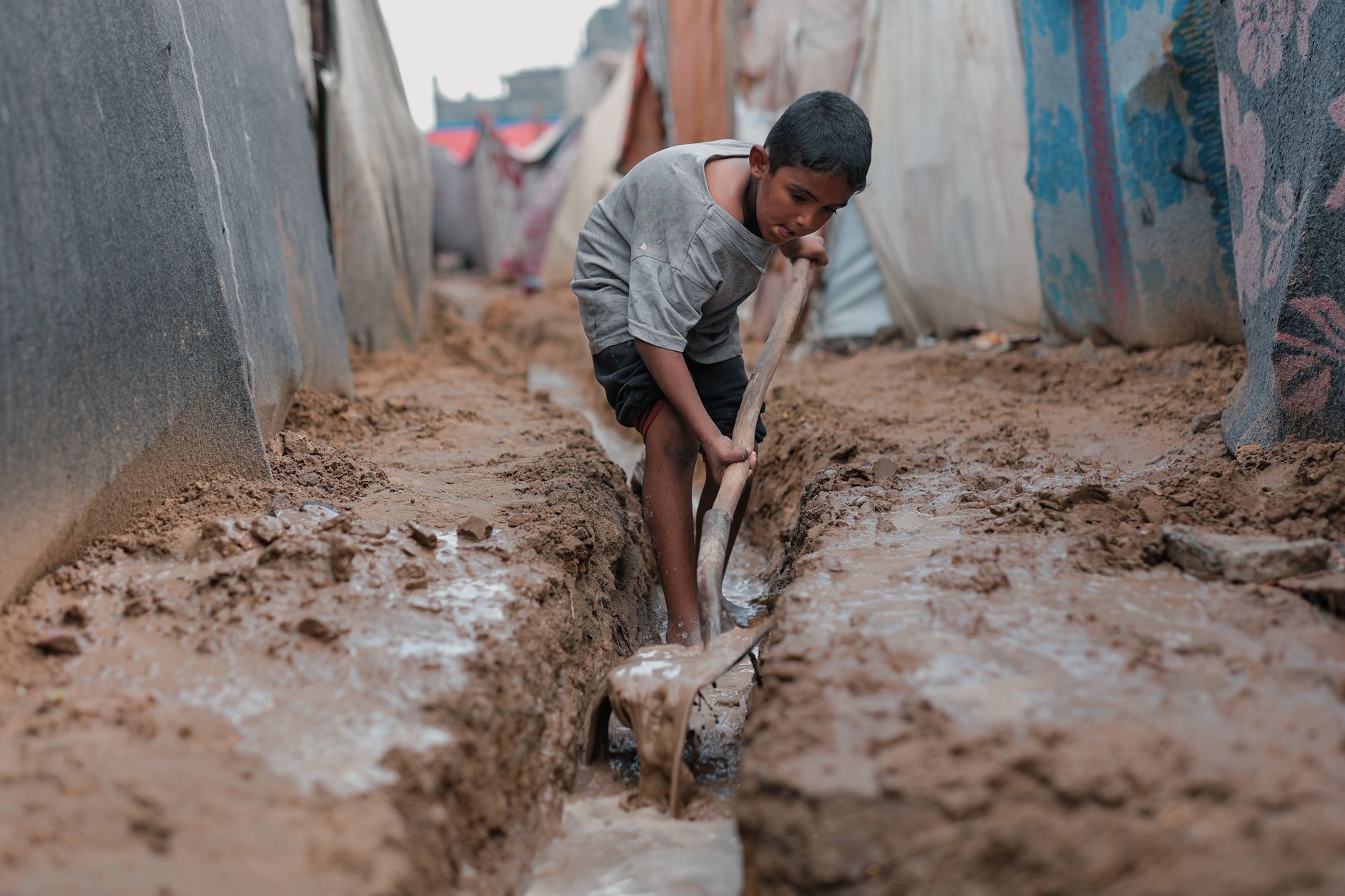
By Saed, Gaza Strip, Palestine, September 14, 2026
Usually, the purpose of an apology is to restore some measure of dignity to the person whose dignity has been violated by an act or a word. But whatever form Hamas’s apology may take, it will not rebuild a home that has been destroyed, bring back a child who has been lost, restore years consumed by fire, or return the dignity that war has stripped away. And yet, many of those who have suffered still feel the need for such an apology.
The calls for an apology that are flooding social media pages in Gaza seem, at their core, to be another kind of battle: a battle to defend reason and values.
It is as if they are saying: If we have lost everything, then at least we still have our minds with which to think, and our human values by which to find our way. And since you have clothed your actions in the language of religious values, and presented arguments to justify them in polished language that appears to come from a rational worldview, we say to you: Stop here.
We will not allow you to drive us out of our values and our reason, just as you helped drive us from our homes.
Admit that you were wrong. Not so that we may forgive you, nor so that we may erase what happened with the words “We are sorry,” but so that you will take your hands off the essence of religion and stop tampering with it in ways that make it appear as though religion itself came in opposition to reason. And so that you will stop using religion as a cover for your mistakes and your failed military and political adventures.
What we know from the Prophet’s guidance is that when the confederate armies gathered around Medina, and the balance of power was clearly tilted toward the polytheists, he ordered the trench to be dug in order to protect the city, the army, the women, and the children. We also know that the Muslims left Medina intending to reach the Sacred House, traveling hundreds of kilometers. When they were prevented from performing the pilgrimage, they did not turn that prevention into a suicidal battle; they turned back.
This is not a call for a simplistic historical comparison. It is a reminder of a clear principle: religion does not ask you to walk into catastrophe and then extract a religious meaning from it after it has happened. Rather, it asks you to use reason, to consider the consequences, and to weigh the results.
All the evidence and facts indicate that you were lured into a hellish scheme. And October 7, no matter how hard you try to describe it as a day on which the occupation’s fortifications were breached, was in reality nothing more than the day you fell into its trap.
You do not want to hear this, because such an interpretation strips away the mythic image of yourselves and confronts you with a less heroic and more painful one: the image of prey lured by bait into a carefully constructed trap, after which an entire people paid the price for falling into it.
An admission of this kind, with all the responsibility it entails, would alter Israel’s electoral equation for decades, expose the right-wing government that used the blood of its own people as a pretext for committing genocide, and grant the Palestinian narrative a profound moral and political victory. But you did not do so, and you will not do so, because you are captivated by your own image on Al Jazeera’s screen—the image that means more money, more support, more illusion, and more blood.